2026 Buyer's Guide
See What's Below.
Catch What Matters.
Expert-compared fish finders from Garmin, Lowrance, Humminbird, and Deeper — matched to your boat, your budget, and the way you fish.
Find Your Fish Finder
Expert-compared fish finders from Garmin, Lowrance, Humminbird, and Deeper — matched to your boat, your budget, and the way you fish.
Find Your Fish FinderFrom a $100 entry-level unit to a full-featured chartplotter, each pick earns its spot at its price point.
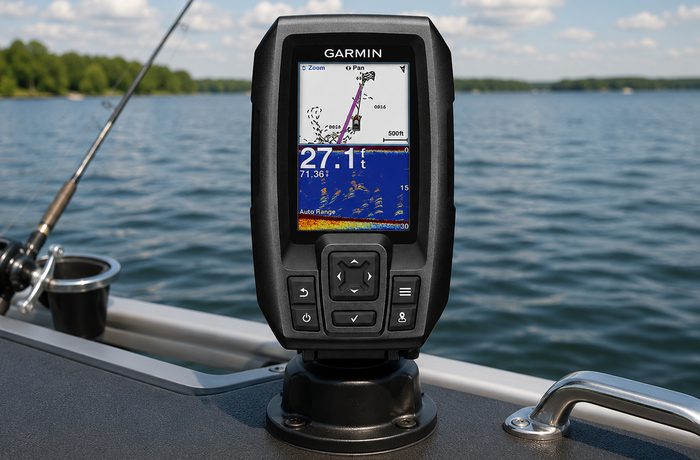
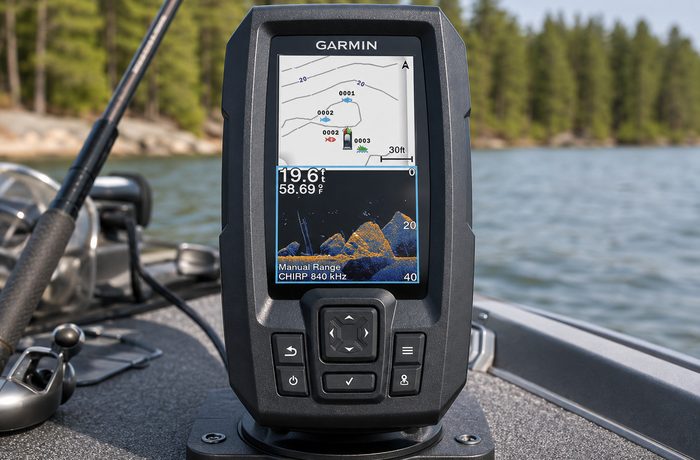
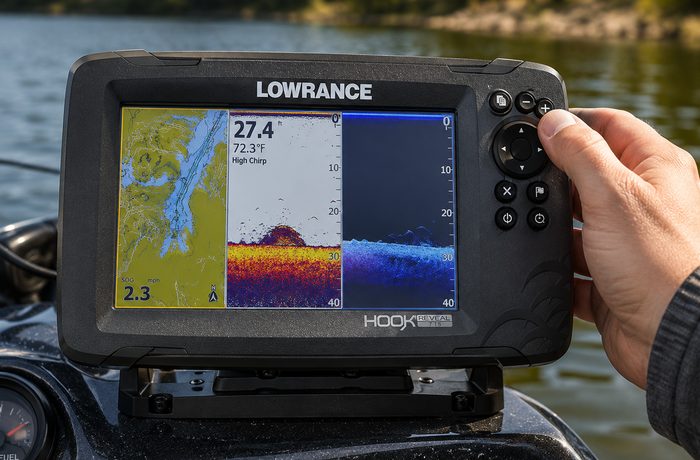
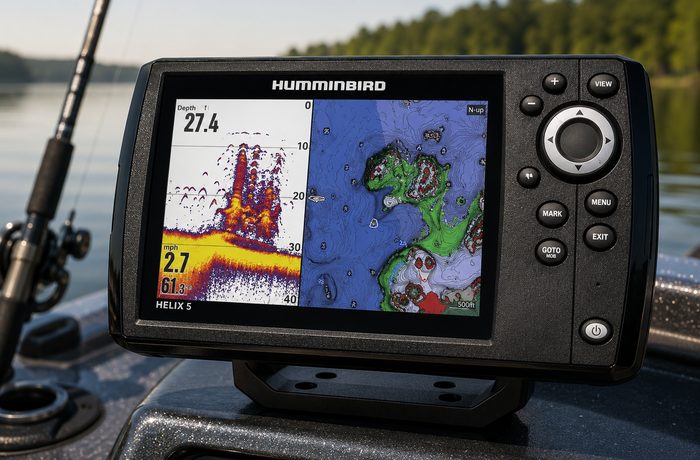
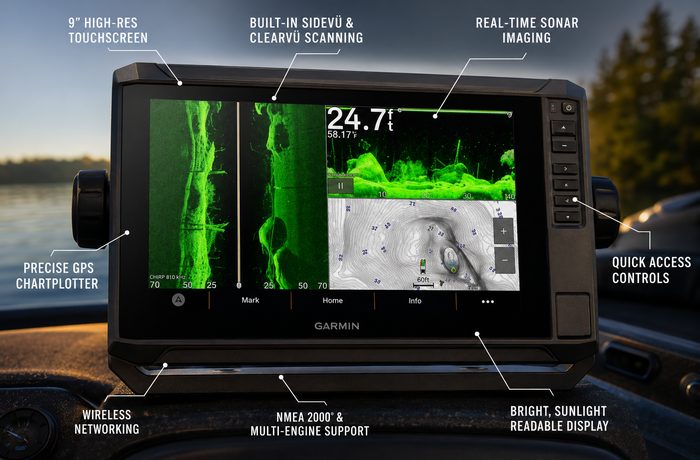
Specs that actually matter when you're choosing between fish finders.
| Model | Screen | Sonar | GPS | Mapping | Best For | Price |
|---|---|---|---|---|---|---|
| Garmin Striker 4 | 3.5" | CHIRP 77/200kHz | Yes | Waypoints only | Beginners | ~$100 |
| Garmin Striker Vivid 4cv | 4" | CHIRP + ClearVü | Yes | Quickdraw Contours | Kayaks | ~$150 |
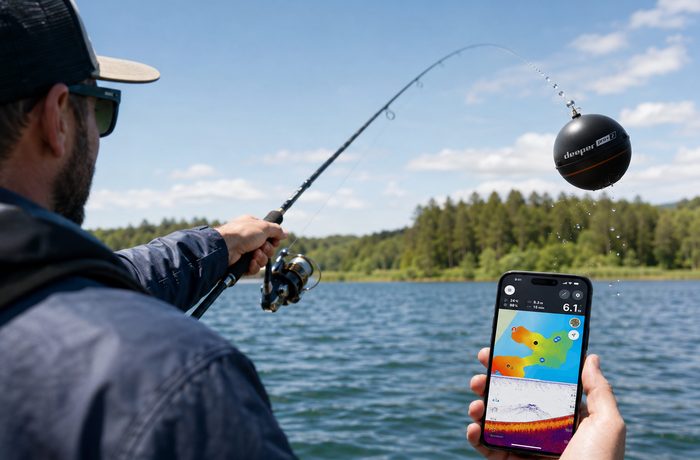
| Deeper PRO+ 2 | Phone app | Dual-beam Wi-Fi | Built-in | Bathymetric via app | Shore / bank | ~$160 |
| Lowrance HOOK Reveal 5 ★ | 5" SolarMAX | CHIRP + DownScan | Yes | C-MAP US Inland | All-around | ~$250 |
| Humminbird Helix 5 G3 | 5" | Dual Spectrum CHIRP | Yes | AutoChart Live | Freshwater | ~$300 |
| Garmin ECHOMAP UHD2 73sv | 7" touch | CHIRP + ClearVü + SideVü | Multi-band | Navionics+ | Serious anglers | ~$700 |
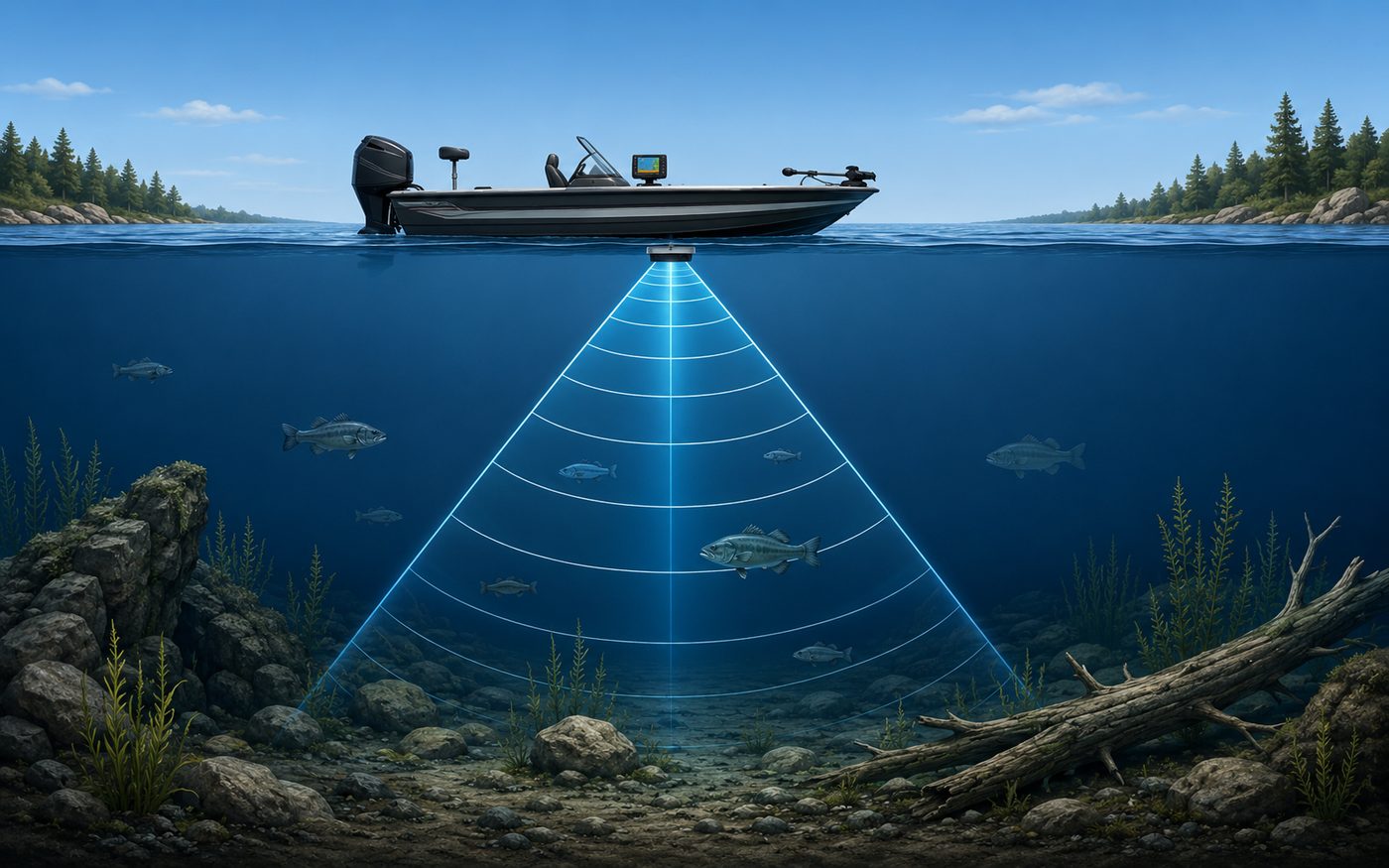
A fish finder sends sound waves (sonar) through the water via a transducer mounted on your hull or trolling motor. When those waves hit something — fish, structure, the bottom — they bounce back, and the unit translates the return signal into a visual display.
CHIRP sonar sweeps across a range of frequencies instead of pulsing a single one, which produces much sharper target separation. That's why you can tell a bass from a brush pile on modern units where older ones showed both as the same blob.
Down Imaging and Side Imaging use higher frequencies at narrow angles to produce near-photographic views of what's directly below or beside your boat. Paired with traditional sonar and GPS mapping, a modern fish finder turns guesswork into a real-time map of the water column.
Different water, different rig, different needs. Here's what works where.
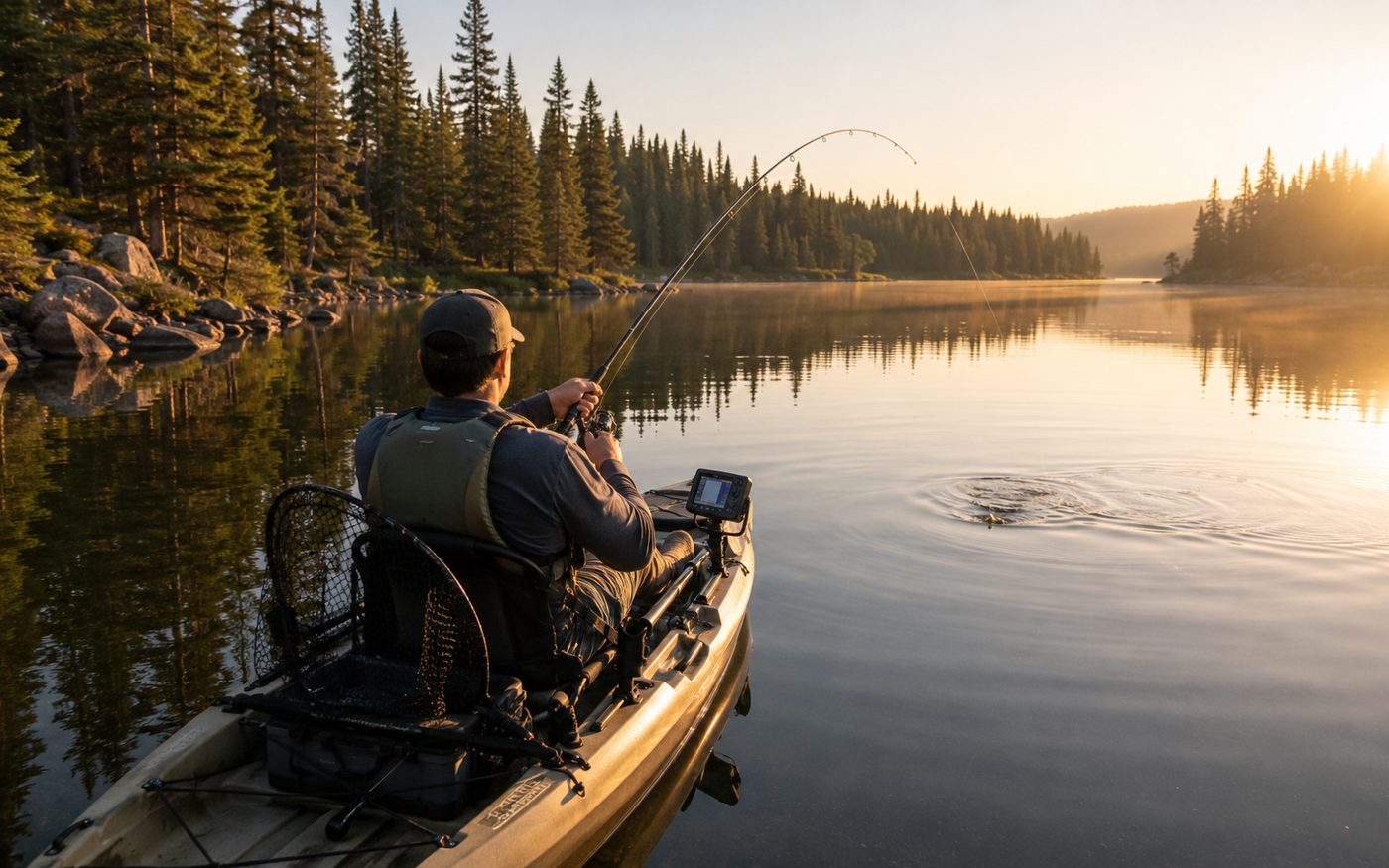
Kayak anglers need a fish finder that's compact, lightweight, and easy to power from a small battery. Screen size matters less than mounting flexibility and waterproofing. Look for units under 12 oz with portable kit options and IPX7 ratings.
CHIRP sonar with ClearVü gives you detailed structure views without the bulk of side-imaging hardware. Built-in GPS lets you mark productive spots and navigate back to your launch point.
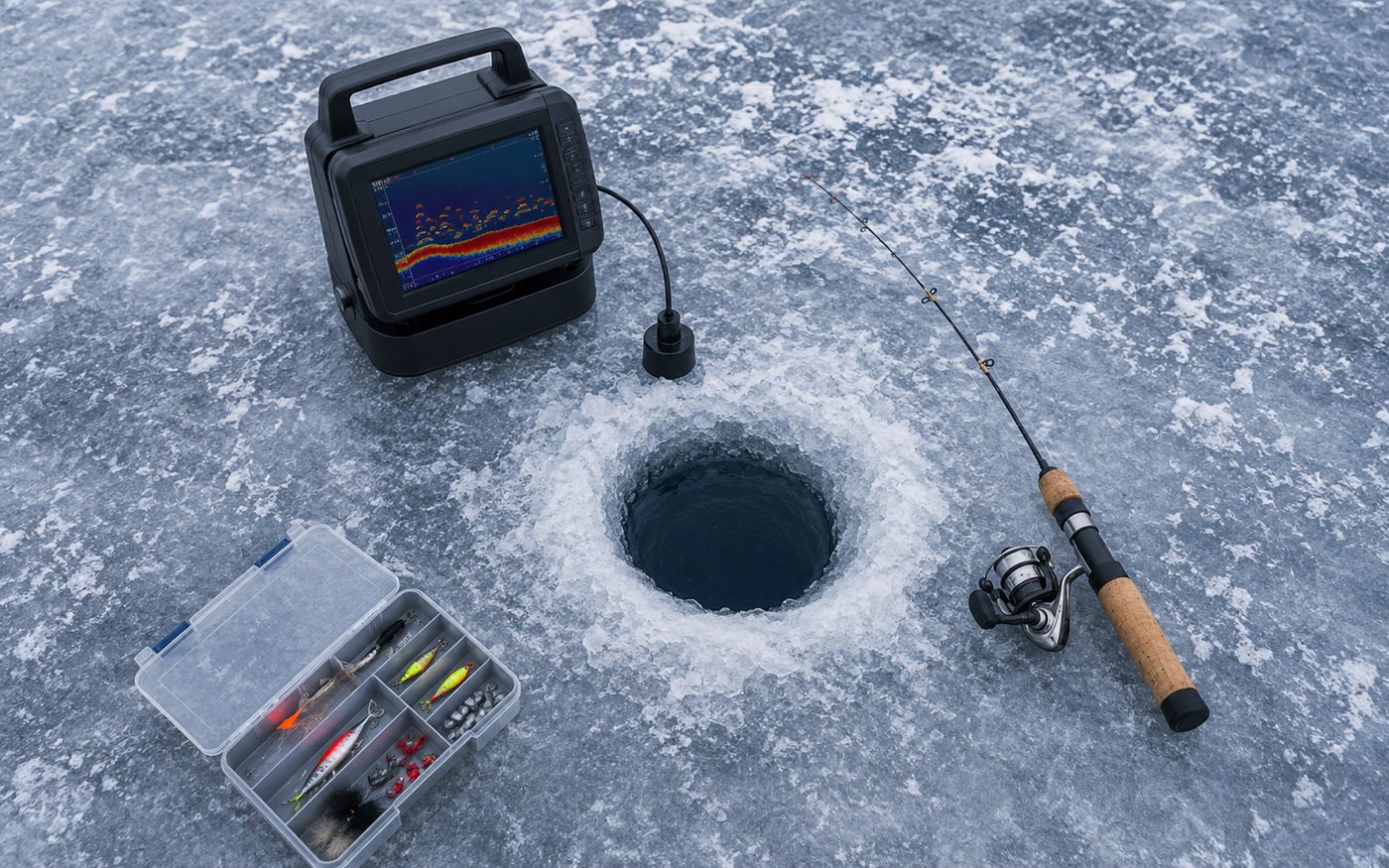
Ice fishing demands a portable fish finder you can carry to the hole, power independently, and operate in sub-zero temps. A flasher-style display or dedicated ice mode is essential for real-time vertical jigging feedback.
The Garmin ECHOMAP UHD2 ice bundles come with a carrying case, rechargeable battery, and ice transducer. But if you're on a budget, the Striker 4 Portable Kit works remarkably well for the price.
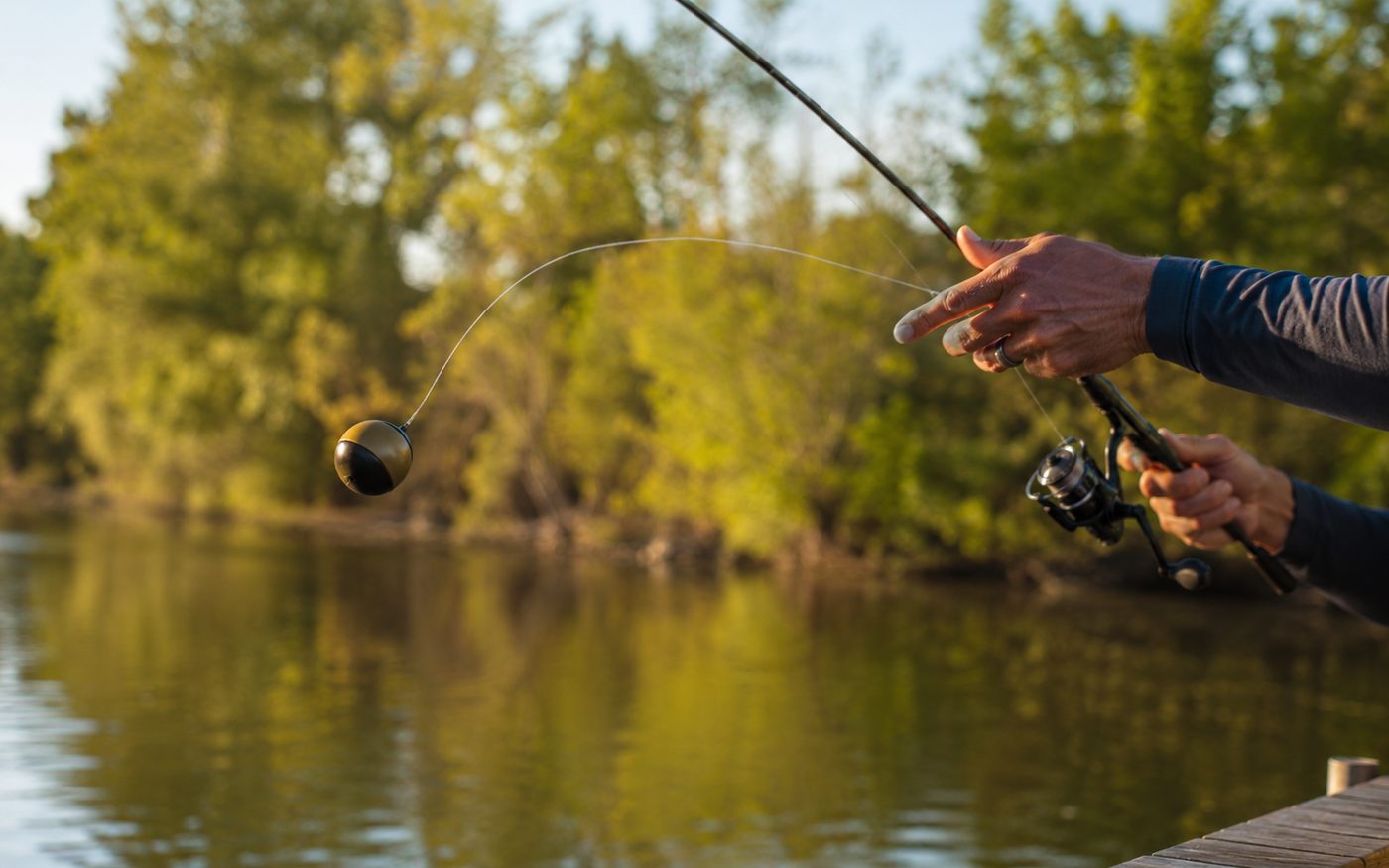
Castable fish finders changed the game for shore anglers. Tie the sonar ball to your line, cast it out, and reel it in slowly — the unit maps depth, structure, and fish positions in real time, feeding the data to your phone via Wi-Fi.
The Deeper PRO+ 2 scans to 260 feet, separates targets down to 1 inch, and builds bathymetric maps with built-in GPS. It works from docks, piers, bridges, and riverbanks — anywhere you can cast.
The specs and features that actually change your fishing.
Traditional sonar sends a single frequency pulse. CHIRP sweeps across a continuous range of frequencies, producing dramatically better target separation and clearer fish arches. Every model on this page uses CHIRP — it’s the baseline for 2026.
Bigger screens show more detail, but add weight and cost. A 3.5–5” screen is plenty for kayaks and small boats. Upgrade to 7–9” if you’re running split-screen views or using side imaging on a bass boat.
Down Imaging (ClearVü, DownScan) gives photographic views directly beneath your boat. Side Imaging (SideVü, MEGA Side) scans horizontally — great for finding structure and cover off to the sides. Side imaging typically costs more but covers far more water.
Built-in GPS lets you mark waypoints (brush piles, docks, hot spots) and navigate back to them. Higher-end units include preloaded lake maps with depth contours. Garmin Navionics+, Lowrance C-MAP, and Humminbird LakeMaster are the three major mapping ecosystems.
The transducer is the part that goes in the water. Transom-mount transducers work for most boats. Through-hull models give the cleanest signal. Trolling motor mounts keep your bow sonar and your motor in one place. Match the transducer to your hull and fishing style.
Fixed-mount fish finders bolt to your console and wire to the boat’s power. Portable kits run on a rechargeable battery and come in a carry bag — perfect for ice fishing, rental boats, or kayaks. Castable units like the Deeper need nothing but your phone.
If you're spending time on the water trying to catch fish, a fish finder removes the guesswork. It shows you depth, bottom structure, water temperature, and where the fish are holding. Even a basic $100 unit like the Garmin Striker 4 pays for itself in saved time and fewer fishless trips.
Traditional sonar sends one frequency at a time. CHIRP (Compressed High-Intensity Radiated Pulse) sweeps through a continuous range of frequencies, then processes each return individually. The result is crisper fish arches, better target separation, and more accurate depth readings. All modern fish finders worth buying use CHIRP. Read our full CHIRP guide →
Yes — castable fish finders like the Deeper PRO+ 2 are designed for exactly this. You tie the sonar ball to your fishing line, cast it out, and reel it in slowly. It sends real-time sonar data to your phone via Wi-Fi. No boat required. They work from docks, piers, bridges, and banks.
GPS is one of the most useful features on a fish finder. It lets you mark productive spots with waypoints and navigate back to them on future trips. Higher-end units include preloaded lake maps with depth contours so you can find structure before you even drop the transducer. Read our GPS & Mapping guide →
For kayaks and small boats, 3.5–5 inches is ideal — readable without taking up precious space. For bass boats and larger rigs where you're running split-screen views, 7–9 inches makes a real difference. Read our Screen Size guide →
Absolutely. Many fish finders have dedicated ice fishing modes or flasher displays designed for vertical jigging through an ice hole. Portable kits with rechargeable batteries and carry bags make it easy. Read our Portable vs. Fixed Mount guide →
Marine Ring